How To Tell If A Tree Is Dangerous: Signs You Need An Arborist In Townsville
A tree may need professional attention if you notice dead branches, a new lean, damaged roots, fungal growth, splitting bark or limbs growing dangerously close to structures or power lines. If something has changed suddenly, booking an
arborist in Townsville for an assessment is a sensible next step. Not every unusual-looking tree is unsafe, and not every problem means the tree needs to be removed. The important thing is recognising changes early so the tree can be assessed before wind, heavy rain or further deterioration increases the risk.
Why It's Worth Acting Early On A Concerning Tree
Tree problems are often easier to manage when they are identified before a branch fails or the tree becomes unstable. Early assessment can help determine whether pruning, monitoring, remedial work or removal is appropriate for the tree and its surroundings. This matters particularly before severe weather. A branch that seems manageable in calm conditions can behave very differently under strong wind, while saturated soil can reduce the support available around a compromised root system. Acting early also gives you more time to plan the work safely rather than dealing with a damaged tree after a storm. For more on preparing trees before severe weather, see our guide on how arborists help prevent storm damage to your property.
Dead Or Hanging Branches
Dead, cracked or partly detached branches are among the clearest signs that a tree needs attention. A branch may have no foliage when surrounding growth is healthy, show splitting where it joins the trunk or hang at an unusual angle after wind or storm activity. These branches can fall without much warning, especially during gusty conditions. Avoid standing or parking beneath a damaged limb, and do not attempt to cut a large suspended branch yourself. An arborist can inspect where it is attached and decide how it can be removed or reduced safely.
Leaning Or Tilting Trunks
Some trees naturally grow on an angle, so a lean by itself does not always mean the tree is dangerous. A new or increasing lean is more concerning, particularly if it follows a storm, excavation or a period of very wet weather.
Look for changes around the base as well. Soil lifting on one side, exposed roots, cracks in the ground or a trunk that appears to have shifted can indicate movement within the root system. If the lean is recent or the tree is moving towards a house, driveway, fence or frequently used area, arrange an assessment promptly.
Visible Root Damage
Roots anchor the tree and support its access to water and nutrients. Damage from trenching, excavation, vehicle traffic, landscaping or construction can affect that support even when the canopy still looks normal.
Warning signs can include severed roots, exposed roots, compacted soil around the base or noticeable changes after nearby ground works. Root problems are not always visible from the surface, which is why a professional assessment can be useful when work has occurred close to a mature tree.
Fungal Growth At The Base
Mushrooms or other fungal growth around the trunk or root zone can sometimes be associated with decaying organic material in the soil, but growth directly on the trunk, major roots or damaged wood may warrant closer inspection. It can indicate moisture and decay are present within or around structural parts of the tree. The appearance of fungus alone does not confirm that a tree is unsafe. We look at the location of the growth alongside the tree's overall condition, root flare, trunk structure and canopy before deciding what action may be needed.
Bark Splitting Or Hollowing
Cracks, cavities and areas where bark has separated from the trunk can point to previous injury, decay or structural stress. Small surface defects are not always serious, but deep cracks, expanding cavities or sections that expose internal wood deserve attention. Hollow trees can sometimes remain standing for years, so a cavity does not automatically mean removal is required. The concern is whether enough sound wood remains to support the tree safely. An arborist can assess the defect in context rather than judging the tree on appearance alone.
Proximity To Power Lines Or Structures
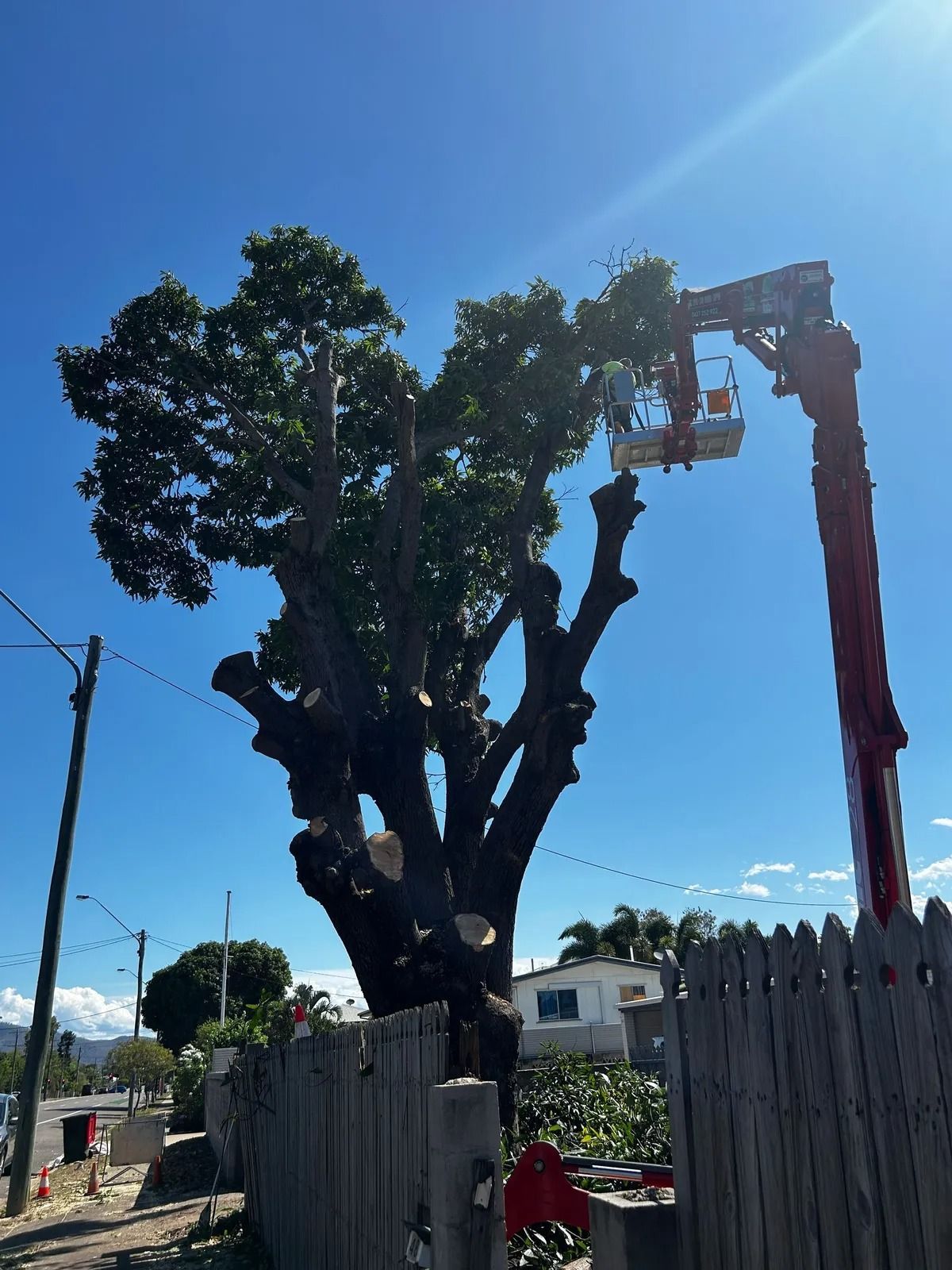
Trees do not need to be visibly damaged to create a problem. Branches growing over roofs, driveways, sheds or neighbouring property can become more significant as they increase in size, while vegetation near power lines requires particular care. Do not attempt to prune branches close to live electrical infrastructure yourself. For branches affecting buildings or access areas, professional tree trimming and pruning may reduce the hazard while allowing the tree to be retained. Where safe retention is not practical, an arborist can explain whether tree removal in Townsville is the more suitable option.
Why North Queensland Conditions Speed Up Tree Deterioration
North Queensland weather can place trees under repeated stress. Strong winds can load branches and trunks, heavy rain can saturate soil and storm events can expose weaknesses that were not obvious beforehand. Heat, rapid growth and seasonal weather changes can also affect how quickly a tree's condition changes. For Townsville properties, it is worth checking established trees after significant storms, nearby construction or visible changes in the canopy or ground around the trunk. A tree that was stable previously may need another look if its environment has changed.
Consider a hypothetical example: a mature backyard tree has always leaned slightly away from the house. After several days of heavy rain, the owner notices fresh soil lifting at the base and the lean has increased. The original lean may have been normal, but the combination of new movement and disturbed soil is a reason to keep clear of the area and arrange a professional assessment.
When To Call An Arborist
Call an arborist when a tree has changed noticeably, has damaged or hanging limbs, shows movement at the base or could affect people, buildings, vehicles or access areas if part of it failed. After a major storm, an assessment is also worthwhile if you can see fresh cracks, broken branches or changes in the tree's position. You should treat the situation as more urgent if a large limb is suspended, the tree has shifted suddenly or damaged sections are directly above an occupied area. Keep people away from the affected zone and avoid climbing, cutting or pulling on unstable material.
The main point is simple: warning signs need assessment, not guesswork. Some trees can be managed with targeted pruning or ongoing monitoring, while others may require more substantial work. The right response depends on the tree, the defect and what is located within its potential fall zone. If you are concerned about a tree on your property, contact
Tree Change NQ to arrange an assessment with an
arborist in Townsville. We can inspect the tree, explain what we find and recommend an appropriate next step based on its condition and surroundings.
Get in touch with our team to request a quote.
Frequently Asked Questions
Can a damaged tree sometimes be saved?
Yes. Damage does not automatically mean a tree needs to come down. Depending on the location and extent of the problem, options may include selective pruning, monitoring or other tree-care work, but the tree needs to be assessed first.
Does tree size alone make a tree dangerous?
No. A large tree is not automatically unsafe simply because of its height or canopy spread. Condition, structure, root stability, defects and what is located around the tree all matter when assessing risk.
Should we inspect trees after nearby building or landscaping work?
It can be worthwhile, especially where excavation, trenching, soil compaction or changes to ground levels have occurred close to established trees. Those activities can affect roots even when the canopy initially appears unchanged.
What should we do while waiting for a tree assessment?
Keep people, pets and vehicles away from any area beneath visibly damaged or suspended branches. Avoid climbing the tree, using ladders around unstable limbs or attempting large cuts without the right equipment and training.
Can pruning make a tree safer without removing it?
In some cases, yes. Removing damaged, dead or poorly positioned branches may reduce a specific risk while retaining the tree. Whether pruning is suitable depends on the tree's condition and the nature of the defect.